Tuesday, September 17, 2013

WHAT IS A "FRAY?"


A number of people have asked me why my Facebook name is "Fray Eric."  They have never heard of the title Fray.

Fray is the Spanish form of the word friar.

Most people have heard of that word. 

For example, Robin Hood's famous sidekick Friar Tuck....


There are friar coffee mugs....


...and friar cookie jars, usually with a nice warning, "Don't steal cookies!"


But what exactly is a friar?


“BROTHER”


LATIN
 
FRATER
 
 
ITALIAN
 
FRA
 
 
SPANISH
 
 
FRAY
 
FRENCH
 
 
FRERE
 
ENGLISH
 
 
FRIAR


When some men in the Catholic Church many centuries ago wanted to live in community as brothers, living a life of prayer, service, in chastity, poverty and obedience to a superior, they took the Latin word for "brother."  Even though many of these brothers were priests, they lived together as brothers, the priests and the non-priests alike.

As the Latin word frater was changed by their native pronunciation, new forms of the word frater were created as seen above.   Fray is the Spanish form of the Latin word frater.  In English, it became friar.

It seems the Franciscans are the most famous of all the friars in the Catholic Church.


Saint Francis of Assisi and his Friars

Saint Francis, who was not a priest, wanted his companions, whether priest or not, to live together as brothers (friars) and to be brothers to everyone and everything in the world.

So we Franciscans traditionally have stressed the fact that, whether priest or not, we are friars.

I like to use the Spanish version of the word Fray in honor of the Spanish Capuchin Franciscan friars who brought our way of life to Guam in the year 1901.

There are Other Kinds of Friars, Too

Like the Dominicans...


....the Carmelite Friars...


....and Augustinians....


....among many more!

SPORTS TEAMS

Where these friars have established colleges and schools, sometimes their sports teams are named Friars.


On Guam, the athletic teams at Father Dueñas Memorial School are called the Friars because it was the Capuchins, when they ran the school, who began the intramural sports program there.


In Providence, Rhode Island, the Dominicans established a college whose teams are called the Friars.


And in a school run by the Servite Friars, their mascot is the Fightin' Friars.

SONGS & CARTOONS

Friars have also appeared in children's songs like "Frere Jacques."  Frere is French for friar.


And in cartoons, like the famous Brother Juniper series.


So "FRAY ERIC" simply means "Friar Eric" and points to my core identity as a Capuchin Franciscan friar.  I am not only a priest, but a friar as well.


Here is a great example of how the two identities - priest and friar - are combined in Spanish.

Father Aniceto Ibañez del Carmen was an Augustinian Recollect priest and friar on Guam in the 1800s.  So his name published here is P. Fr. Aniceto Ibañez del Carmen.

The "P" stands for "Padre," or "Father" and points to his priesthood.

The "Fr" stands for "Fray" and points to the fact that he was also a friar.

Saturday, August 24, 2013

I WILL MISS HER


Sister Mary Mark Martinez, RSM
+August 24, 2013

I never went to any Mercy school, so my first encounter with Sister Mark was in 1980 when I was in the Father Dueñas Minor Seminary.  Every Tuesday, our Rector, Father Tony Perez, went to say Mass at the Oka Convent and we had to go along with him.  Well, we knew we were bound to have a good meal, too, because we stayed after Mass to have dinner with the sisters.

I had heard of Sister Mark before I saw her on those Tuesday evenings at the Convent; heard of her as the strong principal of the Academy.  So I was a bit intimidated by a person with such a reputation.

But she showed a different side of herself when she was with her sisters at the Convent.  She would get up on occasion and sing a funny song or tell a joke.  She made me laugh.

Years and years later, as a priest, we would say hello and maybe talk a little, but nothing lengthy.  But in the recent past, we had talked a lot more and that was when I bonded with her a bit more.


The Sister Mark I never knew.  The habit was simplified by the time I knew her.

She opened up to me and told me all kinds of stories.  But, more than that, she was very friendly with me, joking with me, taking an interest in my activities.  She was intelligent, witty, capable, lively, positive.  I never had an unpleasant second with her, and always, always, always good feelings and good experiences.


Teacher, principal, superior, formation director, historian.

A woman with a good head on her shoulders and a happy heart.

Rest in peace, my dear Sister Mark.

Sunday, August 11, 2013

IN REPARATION


Capuchin missionary Påle' Román had his weaknesses, as we all do.

He was very strong and passionate, and not always diplomatic or prudent in his speech.  He stepped on toes.  Often.

But he had his virtues.  He could learn new languages at lightning speed.  He was a tireless worker.  He was an effective public speaker.  And he had great influence over many people.

In 1905, while many churches in the Philippines were just recovering from the effects of the revolution and the conflicts with the incoming Americans, Påle' Román was sent, with a few other Capuchins, to some towns in the southern Tagalog region to win people back to the practice of the faith.


The Church of Tayabas

In these towns, such as Tayabas and Lucban, people had strayed away from religious practice because the Spanish Franciscan friars had abandoned them during the revolution against Spain and in the turmoil of the transition to American rule, which some Filipinos opposed.

Spanish priests of any sort were unpopular with many people.  Intrepidly, Påle' Román and the others went into these towns to urge people to come back to the sacraments.

Påle' Román, armed with his good command of Tagalog which he had learned in Manila since his arrival there in 1901, enjoyed much success in Tayabas and Lucban in that year of 1905.  Couples living together or married only by the civil authorities came to him for the sacrament of matrimony; confession lines were long; the churches full to hear his preaching; people came to Mass.

 
The Pulpit in Tayabas Church
Did Påle' Román preach from here?

So successful was he that he was sent to the nearby town of Sariaya, another Franciscan parish abandoned by the friars during the political and social upheavals.

But in Sariaya, Påle' Román experienced his Good Friday.

Instead of great success, he was surrounded by a cloud of controversy from the beginning, ensuring a quick conclusion.  He lasted in Sariaya for only six months, from December of 1905 till June of 1906.


The Church of Sariaya

It seems, according to the Capuchin records, that a certain Filipino priest, a native of Sariaya, was very interested in being assigned to his home parish when it became vacant.  Instead, when Påle' Román was assigned there as parish priest, rather than the native son, trouble started.  His family and their allies began to make life difficult for him.

Apparently, the last Spanish Franciscan pastor was also greatly disliked, having had a town resident get in trouble, or, if memory serves, even sentenced to suffer the death penalty.  Another kastila (Spanish) priest meant trouble.

Church staff quit.  Many people avoided church.  His convento, or residence, was pelted with stones.  Storekeepers were instructed not to sell him food.  Påle' Román himself, perhaps with some humor, recounts how he saw from his bedroom window funeral processions passing right past the church to the cemetery without the priest's blessings, to a cemetery he himself could not access because the cemetery keeper refused to give him the key.

Even American officials went to Sariaya to try and mediate.  But, in the end, Påle' Román was recalled by his own Capuchin superior to do work elsewhere.  His Triduum of Six Months ended without his death, and without a resurrection.


The parish priest today of Sariaya was kind enough to let me see the baptismal records.  It shows that Påle' Román was not totally incapacitated in Sariaya.  He did baptize while he was there, as the records show.

In his own accounts, he did have supporters.  Some slipped him food.  But they had to be careful going about this, lest they antagonize Påle' Román's opponents.  Priests come and go, but Påle' Román's supporters would have to deal with his enemies long after Påle' Román's departure.


The Sariaya cemetery : closed off to the parish priest

So, in a kind of reparation, with the help of my good friends, I offered Holy Mass in the church of Sariaya.  It was a special experience for me to offer the very same Mass (the traditional Latin Mass) in the same church where Påle' Román said Mass, amidst much controversy.  My Mass, in contrast, was celebrated in placid tranquility.


I also met the town historian, Eric Dedace, who was most helpful.  I can say that one chapter of this story has now been closed in my book.  With much gratefulness.

 
Sariaya Church as Påle' Román probably saw it
 
 
The Rectory
 
It's been renovated, but it's basically the same structure that was pelted with stones when Påle' Román lived there in 1906.

Wednesday, August 7, 2013

A MOMENT WITH ST DOMINIC...AND ST FRANCIS


In the year 2000, since I had to go to Rome as a delegate to the Capuchin General Chapter, I had a chance to try and develop a devotion to St. Dominic, something I consider under-developed in my own life.

I knew of him since childhood, if only as the one who "gave us the rosary," as the Chamorro hymn Ta Fan Lisåyo says.  As a kid, I read about his life as a former Augustinian who saw the need to preach the Catholic faith in the south of France during the Albigensian heresy.

Even before I became a Capuchin, I knew he was a contemporary of Saint Francis and that they had met.  Then, as a friar myself, I came to understand our orders as "twins," calling each other's founders "Holy Father Francis" and "Holy Father Dominic." 

There is a tradition that, on the feast of St Francis, a Dominican preaches, and a Franciscan preaches on the feast of St Dominic.

Later, I went to a Dominican school of theology.  Most of my theology professors from 1986-1990 were Dominicans. 

But there, we heard almost daily about St Thomas Aquinas - not St Dominic. 

I still consider myself quite inadequate in the area of St Dominic personally; who he was, and what were the main characteristics of his vision and ideals.

So in 2000 I decided, on a free day, to make a pilgrimage to the Church of Santa Sabina, the international headquarters of the Dominican Order, where tradition says Saint Dominic and Saint Francis met to talk and pray.


Santa Sabina in Rome

The church, actually a basilica, is somewhat out of the way.  But I found it, and approached the porter, a young lay woman; probably a Dominican tertiary.  She spoke no English, so I spoke in broken Italian.  I asked to see the cell (room) where Saints Francis and Dominic prayed.

She said I had to wait; the priest who could allow me access was out.  So that was my first surprise; that this room was not a main attraction there for visitors.  In fact, there was no promotion about it at the church.  It was like a well-kept secret.

How good that porter was to stand there for the better part of an hour, trying to keep me occupied by speaking to me in beautiful Italian, and bearing with my poor Italian.

Finally, the priest was available and he let me into what I remember was a pretty non-descript room.  Some call it a chapel, but I don't remember it as one.  But that was 13 years ago.

I sat there, and said some prayers and tried to imagine the scene 800 years ago.  But I must confess that not much happened and I made for the door.  I was happy to have waited almost an hour for a fifteen minute visit.

I later learned that a Carmelite, Saint Angelus, was also involved in the visit between Saints Dominic and Francis.  I suppose, then, it was their moment, all those years ago.  And I still need to get to know this Saint Dominic a bit more. 

Tuesday, July 30, 2013

MY DEBT TO THE SONS OF IGNATIUS


Saint Ignatius of Loyola
Feast Day July 31
Founder of the Society of Jesus (The Jesuits)

I. MY CHAMORRO FAMILY IS CATHOLIC BECAUSE OF THE JESUITS

As far as I can tell, because our records don't go back very far, these are all the surnames included on the Chamorro side of my family tree :

Torres
Perez
Rodriguez
Cruz
San Nicolas

These are all Hagåtña names.  And none are pure, indigenous Chamorro names.  But somehow these Spanish, Mexican, South American, Filipino and possibly Portuguese settlers married Chamorro women and their descendants spoke Chamorro and lived the Chamorro culture and, above all, did not consider themselves Spanish, Mexican, Filipino or anything other than Chamorro.

And they were all Catholic.

Whoever were my pure Chamorro ancestors, at some point, became Catholic.  Thanks to :


A Jesuit
Blessed Diego Luis de Sanvitores
Founder of the Catholic Mission of the Marianas

II. AMERICAN JESUIT MISSIONARIES GAVE ME GOOD EXAMPLE

The missions south of Guam, the Carolines and Marshall Islands, were sponsored by American Jesuits.  When they would travel to Guam, they often stayed at the Capuchin Friary where I lived.  That's how I got to know a few of them.

They were older; in their 60s, 70s and 80s.  They had spent 20 or more years in small islands, many without electricity.  Some of their islands had just 300 people on them.

They lived a very simple life; building chapels and churches with simple material.  They learned the native languages and knew everyone in their islands.

When they stayed at the Friary, I saw how materially simple they were.  One older Jesuit came in from the airport around 2AM and couldn't find a key to his guest room.  So we found him sleeping on the hard floor at 630AM.  But he had no complaints; "I'm used to it," he said.

They had a great demeanor about them.  Balance.  Pleasant, friendly but with a kind of dignity.  A kind of hardness, but in a manly way.  Fatherly.

In conversation, nothing taken to extremes.  Neither sullen nor loquacious.  On church topics, nothing extreme either.  It seemed to me one could never get into an argument with them, because it takes two to argue.

Later I learned Ignatius' teaching about trying to find commonality with others and lead by gentle persuasion.  These men were conversing with fellow priests, most of them of the same generation and Catholic culture.  There was hardly anything to argue about.  Still, there was a kind of civility in their tone.

 
Jesuit Bishop Martin Neylon had that Jesuit cordiality.  I do not speak of his record as a bishop; I was aware not every priest agreed with his policies, but what's new about that in the Church? 
 
 
Father Hugh Costigan was a giant of a missionary.  He founded a trade school on the island of Ponape, with funds he obtained from all over the globe.  He had friends everywhere.  He was a tall man.  Formerly in the Philippines and spent World War II there under the Japanese.  He knew Father Dueñas because of that and defended Father Dueñas against Tweed's accusations of breaking the seal of confession.
 
Jesuits were my professors....summer Scripture classes on Guam; various classes in Berkeley; pastoral counseling at Creighton.
 
Jesuits were my spiritual directors for a while.
 
III. IGNATIAN RETREATS
 
All during my formation years as a future priest, my annual retreats were Ignatian, based on Jesuit spirituality.
 
Sometimes we were lucky to have a Jesuit passing through Guam and could do an 8 day retreat on Guam.  Other times, I'd fly to Saipan and do a retreat there with a Jesuit.
 
Two directors I remember well.  Father Rice from the Jesuit retreat house in Cebu (Philippines) and Father Orlando Torres from Puerto Rico, who I hear is some higher official now in Rome.
 
One retreat was particularly important to me.  It was with Father Rice at Maturana Hill in Saipan.  The summer of 1987.  I was going through a severe testing of my vocation.  The details are not important.  It had nothing to do with celibacy.  It had everything to do with attachment to success.  Ignatius' focus on freedom from attachments was just what I needed.
 
But freedom is not something you decide to have; flip a switch and there you have it.  It is a grace.  But I got that grace, unexpected and unplanned - as grace often is - one night on that retreat.  The moment the freedom came, around 9PM, I had to go see Father Rice, who graciously received me even though he was done for the night.
 
I will be forever grateful for those Ignatian retreats and recommend them if they are done well.
 
I always try to get my hands on anything written by Ignatius.  I love his way of thinking.  "Our manner of proceeding...."  Not only what to do, but also how to do it.
 
Great synthesis of human psychology and Catholic faith.
 
So, thanks, Bishop Neylon, Fathers Fahey, Nicholson, Costigan, Rice, Sullivan, Mulhauser et al.  Much appreciated!
 
 
TOP THREE THINGS I HAVE GOTTEN FROM THE JESUITS
 
  • God's actions are like water drops on a sponge; the devil's like a waterfall on rocks.
  • Go in their door, as long as they come out your door.
  • Think about how you're going to do it, not just that you'll do it.

Wednesday, July 24, 2013

WHAT IS "JAMES" IN CHAMORRO?


Follow me now.  Take it all in slowly.

But "James" in Chamorro is, mainly, SANTIAGO.

OK, follow me now.

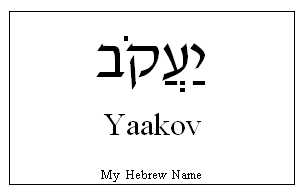
It all starts with the Hebrew name Yaakov.  In English, we know it as Jacob.

But in Latin, which was the language used by the Church for thousands of years all over Western Europe, Yaakov is Jacobus.

In Latin, the J sounds like an I or a Y.  So sometimes it was spelled Iacobus.

To shorten it, the Spaniards would say Iago (from Iacobus).

Now, "saint" in Latin is "sanctus."

To shorten "sanctus," the Spaniards turn it into "San" or "Santo."
 
SANTO + IAGO = SANTIAGO

But there are two other versions of James in Spanish/Chamorro.

Santiago also got shortened to Tiago (a name found in Portugal and Brazil), and from Tiago we get Diego.  So Diego is another form of Santiago.

To confuse you some more, Diego is also the Spanish form of the Latin name Didacus.  But that's enough of that.

Finally, there is the form Jaime.  In Spanish and Chamorro, that would be pronounced HAI - MEH.

Jaime also comes from a shortening of Jacobus because at first it was shortened to Jaume, and from Jaume to Jaime.

Even in English, we see the progression :

JACOBUS becomes JACOME (in parts of France)
 
JACOME becomes JAMES (in England)

THE MYSTERY OF SAINT JAMES AND SPAIN


Saint James the Greater, whose feast is celebrated today, is the Patron of Spain.  There is a huge shrine to him in a city named after him, Santiago Compostela in the province of Galicia in Spain.  What's the connection?

Tradition has it that Saint James the Apostle of Jesus (in Spanish, Santiago Apostol) went from Israel to Spain preaching Christianity.  He was, therefore, if the tradition is correct, the first Apostle to evangelize the Iberian Peninsula.  Saint Paul talked about going to Spain, but more than likely never did.

Many scholars doubt this tradition because Saint James died rather early, and in Jerusalem, not in Spain, in the year 44AD.  On the other hand, this would have given him roughly ten years to make the trip to Spain, from the time of Jesus' Ascension and the time of his own death in 44AD.

The tradition continues that the body of the martyred saint was brought back to Spain and buried in Galicia.  In time, his tomb was forgotten due to wars and foreign invasions.  Then, centuries later, a shepherd, guided by a star, was lead to the burial site and discovered it.  From then on, a succession of churches were built on the site, called Compostela because, as tradition has it, it was a star (stella) that lead to the discovery of the field (campus) where the body lay.  Again, some scholars dispute this and think the name comes from other possible origins.

Whatever the case, the cathedral/shrine to Saint James in Compostela became a major destination for Christian pilgrimages in Europe.  It was the shrine of an Apostle, a big deal to Christians.  Yet, it was safely in Christian lands, not like the other holy places in the East which were under Muslim control and more dangerous for Christians to travel.

 
The Cathedral of Santiago de Compostela

In the Middle Ages, the shrine of Saint James in Spain was a major pilgrimage center for all of Western Europe.  A series of roads eventually were mapped out to bring pilgrims - walking by foot - to the shrine.  It was called the Camino de Santiago, the Way of Saint James.  All along the route, there were specially-marked towns where pilgrims could receive hospitality.  There, a church official would mark a certificate with a stamp that the pilgrim had reached that far.  When they completed the journey to Compostela, they received the final recognition they had fulfilled the pilgrimage and gained the graces and indulgences attached to it.

 
Saint James dressed as a Pilgrim

The scallop shell, or concha de vieira in the Galician language, became associated with the pilgrimage to Santiago and we're not sure why.  We do know that one wore these shells after one completed the pilgrimage, on the way back home.  Nowadays, people wear them on the way to Santiago.


Modern Pilgrim in Traditional Attire

The medieval pilgrim, who went on foot, carried a staff.  He wore a wide-brimmed hat for protection.  He wore a cape and carried a water gourd and a pouch or wallet.


San Roque dressed as a Pilgrim

Gourd, staff, wide-brimmed hat and shell.


The Pilgrim's Passport, marked with the stamps of some of the official towns and churches along the Camino de Santiago, the Way of Saint James.


When one reaches the shrine at Santiago, one receives the Compostela, the certificate of completion.

Santiago Matamoros

In addition to all this, Saint James rose in prominence in Spain when the Spaniards warred against the Muslim Moors who had ruled over their country for many years.  A Spanish king dreamt of Saint James, who then lead them in battle, appearing on horse back.  The Christians defeated the Muslims, and Saint James was then known as Matamoros - the Moor killer!


Santiago Matamoros
 
Patron of Paete, Laguna Province in the Philippines